
Team collaborating on laptops in a working session
The Dispatch/Mobile
MobileTechnical

Native App or PWA?

Choosing the Right Stack for Your Enterprise in 2026

SKSneha KapoorMobile Practice Head · Jul 14, 2026 · 9 min read

The answer is not always native. It is not always PWA either. Three factors most decision-makers never consider until six months in.

01The Question Everyone Asks Wrong

Leadership usually frames the decision as native versus PWA — as if those are the only two rooms in the building. In 2026 the real choice is which surface the product needs: a store-listed app with deep device access, an installable web app that ships from one URL, or a cross-platform native shell such as React Native.

Teams that skip that distinction spend the first six months rediscovering constraints: push behaviour on iOS, offline sync, biometric login, store review cycles, and who owns the release. The stack is not a preference. It is a consequence of those constraints.
Smartphone and laptop showing a connected web and mobile experience

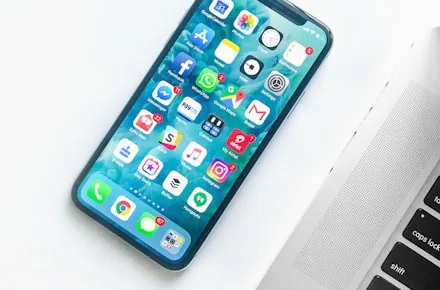
PWA

One URL, installable on the home screen, shared across devices. Fast to ship — with platform limits you must design around.
Smartphone home screen filled with native application icons

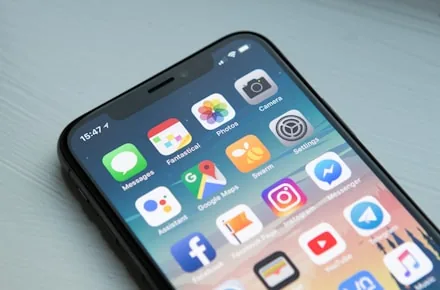
Native

Installed from the store, full OS access, and the home-screen presence users already expect from enterprise tools.
Hand holding a smartphone with a native-quality dashboard interface

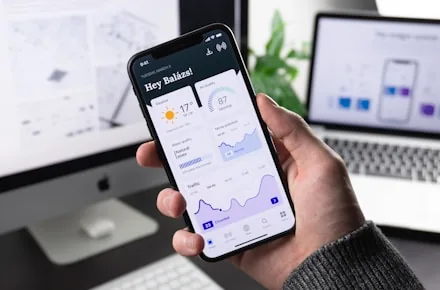
React Native

Native UI on iOS and Android from one codebase. Closer to device APIs than a PWA, faster than two fully native teams.

Platform myths — fact-checked for enterprise

False

PWAs cannot send push notifications on iOS.

iOS 16.4+ supports Web Push for PWAs added to the home screen. Enterprise MDM environments may still restrict this, so verify your deployment context.

False

React Native is a compromise between native quality and web speed.

Modern React Native with JSI (JavaScript Interface) delivers near-native performance for 95% of enterprise use cases. The "compromise" narrative is 2019-era.

False

PWAs are always faster to build and deploy.

PWAs avoid app store friction but require service worker complexity, caching strategy design, and offline sync architecture. For complex apps, build time is comparable.

False

Offline-first apps always need native.

PWAs with well-designed service workers handle read-heavy offline scenarios well. Complex write-then-sync operations (field service, inventory) still favour React Native + WatermelonDB.


02Capability Matrix: Native vs React Native vs PWA

Enterprise feature support comparison — 2026

CapabilityNative (iOS/Android)React NativePWA
Camera (advanced)FullFullBasic only
Push notificationsAll platformsAll platformsiOS 16.4+ only
Bluetooth / NFCFullFullNot supported
Offline-first (complex sync)BestExcellentLimited
App store distributionWeb only
MDM / Enterprise enrollmentFullFullVaries
Update without app storeRequires reviewCodePush onlyInstant
Team skill requirementSwift / KotlinJavaScript / TypeScriptHTML / CSS / JS
Relative build cost (index)1006540

03The 2026 Decision Framework

After auditing 60+ enterprise mobile projects, we distilled the decision into a sequential prompt chain. Answer each in order. The first 'yes' determines your stack.

Smartphone on a desk beside a laptop, representing a browser-based PWA

PWA: browser-based, works on any device with a URL

Smartphone home screen with native application icons

Native: full hardware access, app store distribution

Hand holding a smartphone showing a native-quality dashboard

React Native: one codebase, near-native performance

Sequential decision prompts — answer in order

  1. 01

    Does the app need Bluetooth, NFC, or advanced camera (barcode, AR)?

    If yes: native or React Native. PWA cannot support these hardware capabilities in most MDM environments. Stop here.

  2. 02

    Does it require complex offline write-and-sync (field ops, inventory, inspections)?

    If yes: React Native with WatermelonDB or MMKV. Service worker sync architecture breaks under complex concurrent writes. Stop here.

  3. 03

    Does your internal team maintain web stacks (JS/TS/React)?

    If yes: strong case for PWA or React Native. Avoid introducing a native mobile team unless you plan to staff it permanently.

  4. 04

    Do users need frequent, friction-free updates?

    If yes: PWA wins on deployment model. App store review cycles add 1–3 day latency to every release. For compliance or ops tools that update frequently, this matters.

  5. 05

    Is the primary surface a desktop/laptop browser?

    If yes: start with a responsive web app. A PWA is just a web app with a manifest and service worker. Build the web app right and PWA is a 2-day addition.

SK

Sneha Kapoor

Mobile Practice Head, InvesQ Tech Solutions

Helping enterprise teams navigate technology decisions with clarity. Writing about what actually works — from the ground up.

Ready for a Brand That Matches the Business Behind It?

Schedule a technical consultation with InvesQ leads to evaluate your project, discuss scoping, and chart a clear path to execution.

Book a Consultation