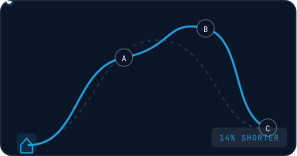
Shipments Sit in the Warehouse Undelivered
- 1Order picked Friday afternoon
- 2Warehouse closes for weekend
- 3No delivery scheduled
- 4Customer expecting Monday delivery
- 5Package sits until Tuesday — 48 hours late
Impact: 48h delay + expedited freight cost
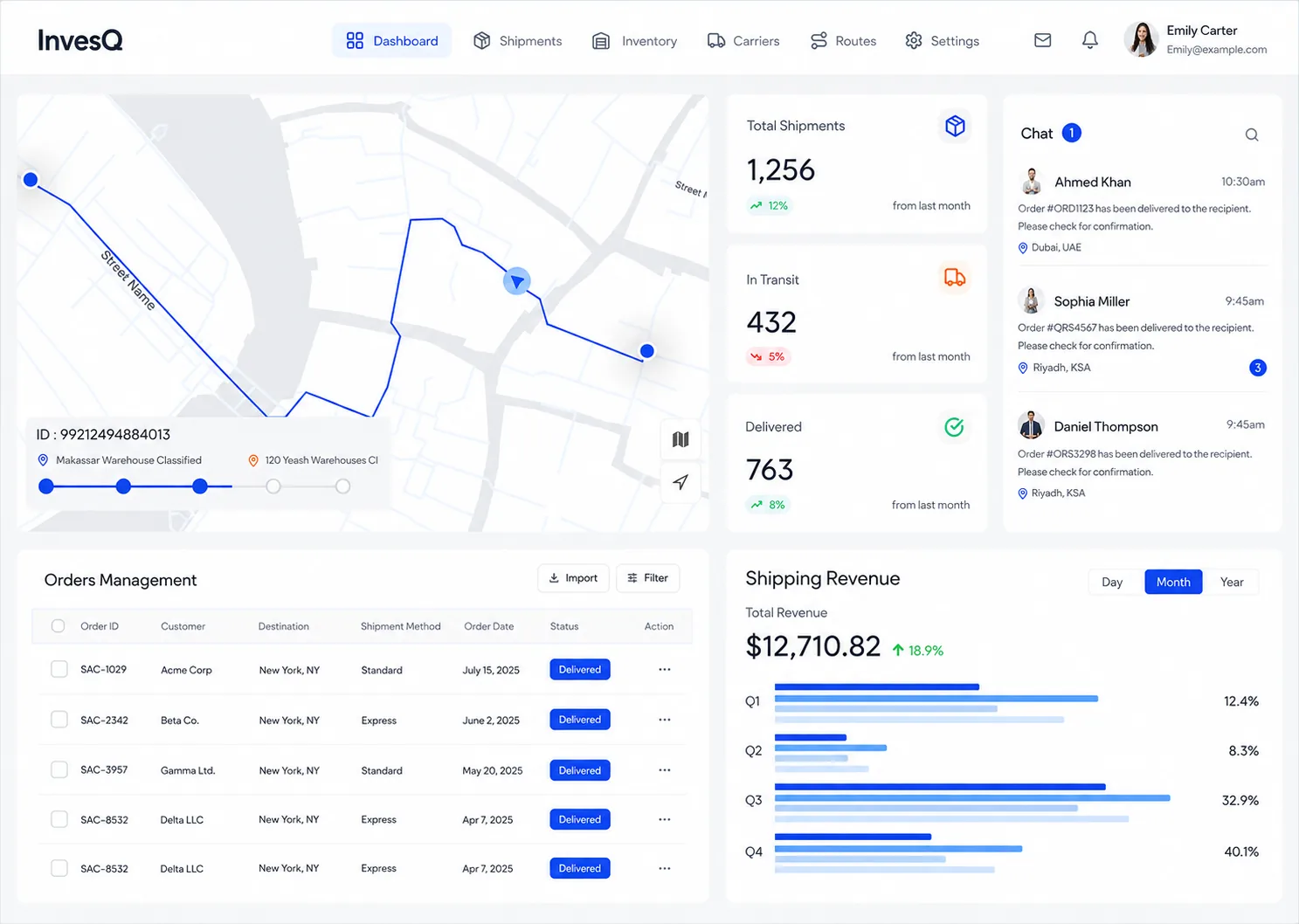
Gain real-time visibility across your logistics network and resolve issues before they impact customers. Track every shipment from warehouse to delivery with one connected logistics platform.

The real cost of manual tracking and courier-only visibility.
Impact: 48h delay + expedited freight cost
Impact: NPS score drops, frustrated customers
Impact: Full day lost, customer trust broken
Impact: Customer frustration, call center overload
Impact: Overselling committed stock, failed shipments
Impact: Budget overruns, no courier benchmarking
48h
avg. delay from warehouse blind spots
62%
of delivery failures caught too late
3x
more inbound calls from poor ETA visibility
0%
courier cost transparency without integration
From manual check-ins to fully tracked operations in weeks.
01/09
Warehouse-to-Delivery Tracking
14:32 · Regional Hub
01/09
Warehouse-to-Delivery Tracking
Logistics Software: What Businesses Rely On Today and What's Missing.
Most businesses rely entirely on their courier's tracking portal. It shows basic movement — but nothing about your warehouse, your costs, or your customers. You're flying blind on everything that matters.
A generic TMS gives you real route optimisation and multi-courier support, but it's engineered for operations running a hundred vehicles or more. For an SMB, that means a high-cost implementation and months of configuration to unlock features you'll never use.
Inventory systems track stock accurately while it sits on your shelves. The moment it's handed to a courier, the record goes quiet: no delivery status, nothing to tell the customer, no way to catch a failed drop before they call you.
We connect the gap the other three leave open: warehouse stock, courier movement, and customer updates in a single view. Exception alerts reach you before the customer does, and cost analysis across couriers shows what each delivery actually costs you.
Traditional Logistics vs. Connected Logistics
Limited or manual tracking
Real-time shipment tracking
Manual scheduling and coordination
Centralized dispatch management
Phone calls or emails
Automated notifications
Requires support assistance
Self-service tracking portal
Separate inventory records
Live warehouse and inventory visibility
Paper-based or manual
Digital proof of delivery
Updated manually
Automatic inventory synchronisation
Limited visibility into performance
Track delivery status, SLA, and performance
Identified after customer complaints
Instant alerts for delays and exceptions
Spread across multiple systems
Unified logistics dashboard
Manual reports
Real-time analytics and insights
Email and phone coordination
Shared workflows and live updates
Reactive communication
Proactive delivery updates
Difficult to manage growing operations
Scales with warehouses, fleets, and deliveries
Business Impact
Not incremental improvements. A fundamental shift in how your entire logistics operation runs — from dispatch to delivery to data.
Smarter logistics, built around your operations.
A01
Industries
E-commerce retailers, online marketplaces, direct-to-consumer brands
Why This Industry Fits
Step 01
Receive and organise orders from one central platform. No scattered spreadsheets, no missed requests, every order lands in one place from the moment it arrives.
Assign shipments, schedule pickups, and brief couriers, all with complete visibility into who has what and when it needs to move. No phone tag, no guesswork.
Step 02
Step 03
Monitor deliveries in real time from warehouse to destination. Live status, exception alerts, and customer notifications, all without anyone picking up a phone.
Capture digital proof of delivery, automatically update inventory, and keep customers informed at every step. The last mile is where trust is won or lost.
Step 04
Yes. We connect via APIs to major global and regional carriers including Australia Post, Toll, StarTrack, Delhivery, BlueDart, DHL, FedEx, and Shiprocket, as well as custom API hooks for local couriers.
Our Logistics supports multi-warehouse operations. Each warehouse has its own picking/packing process. The system shows inventory across all locations and allocates shipments efficiently.
Return workflows are supported. Customer initiates a return; we create a return shipment label, track the return to the warehouse, and update inventory when it arrives.
Yes. Customers get a tracking link (email or SMS) that shows package status, delivery window, and live GPS if the courier provides it. Reduces customer service calls dramatically.
The system is notified immediately. An automatic workflow can trigger and send the customer a notification, offer rescheduling options, or automatically re-attempt with the next-available time slot. You avoid day-late discovery.
Yes, if you have courier partnerships for international routes. The system supports multi-currency and tracks international shipments. Customs documentation can be attached and tracked.
Our Logistics Solutions tracks cost per shipment by courier, destination, and weight. Reports show which courier is cheapest by route. You can then negotiate rates with couriers based on data.
Stop chasing deliveries. Start managing them with complete visibility.
Book Your Free Logistics Consultation